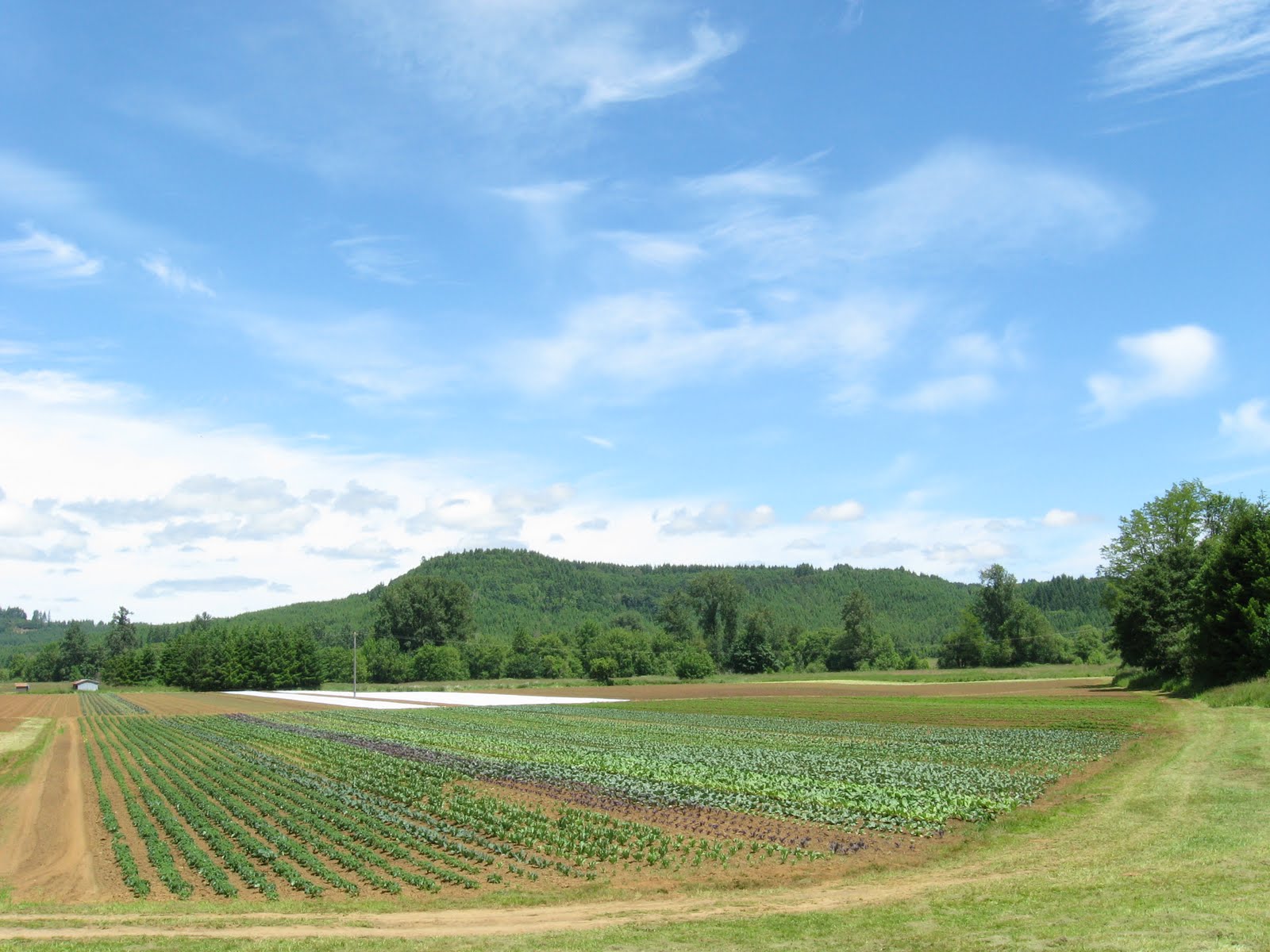
I spent the better part of yesterday afternoon at a
GAPs training session in
Puyallup. If you are not familiar; the
GAPs or "Good Agricultural Practices" are a set of federal guidelines meant to improve consumer safety. They are, like many other government generated programs, loosely based on science and firmly based on fear. That said, please understand that at this time
GAPs certification is voluntary. We at
Boistfort Valley Farm are positioning ourselves to implement a
GAPs program in house and intend to seek third party certification in 2011. As the farm has grown we have embraced relationships with institutional customers. It is our pleasure to do business with several institutional buyers that show a very real commitment to providing nutritious food that is sourced locally to their customers. Please see my post regarding the staff at Intel:
http://boistfortvalleyfarm.blogspot.com/2009/10/if-intel-is-inside-and-we-are-inside.htmlChefs like Kris
Kamp at Intel and Maury Bennett at St. Martins have an enthusiasm for their craft that is equal to the finest Chefs in the finest restaurants.
I must report that when I speak with other small farmers these guidelines are not viewed favorably. They do carry with them a
significantly increased burden of paperwork and have elements that are at odds with some sustainable practices especially regarding wildlife and rotational practices that include livestock. The guidelines would have you believe that the presence of wildlife and domestic animals on a farm are a liability, that is a bitter pill to a farm that has just spent so much energy recreating a riparian buffer that is largely geared toward increasing habitat for wildlife and spent so much money and time restoring a barn that houses barn owls and bats. Many elements of the
GAPs are just good common sense and we are in favor of the formal nature of the record keeping and policies which address sanitation and cleanliness as well as monitoring of water quality.
http://www.democraticunderground.com/discuss/duboard.php?az=view_all&address=268x3355Personally I believe that in a world with a food system that can so quickly and broadly distribute a product that is a risk to human health that
GAPs are a necessary component of that system. However when it comes to a farm like ours where we can trace back a product so quickly and personally they are largely redundant. We harvest a product, wash it, box it, cool it overnight and then deliver it. We know our
CSA and commercial customers by name and are present at Markets. It would be an easy task to trace a head of lettuce from the consumer to the person that packed and or picked it to the field of origin. We already keep careful detailed records as part of our farm management and are not particularly intimidated by the paperwork necessary to complete a
GAPs audit. I am a bit torn on the issue of wildlife as liability, or the notion that nature is dangerous and harmful. I often leave the
GAPs training exercises with the idea that food might be best grown in a laboratory setting. If what the food safety experts say is true we would have no living dairymen in this country, and truth be told we as a species are probably more at risk of injury from lowered immune system response as a result of
over-sanitizing than we are of pathogens present in our food.
http://www.phac-aspc.gc.ca/publicat/ccdr-rmtc/98vol24/dr2403ea.htmlPlease do take some time to familiarize yourself with this issue, I think we will hear more about this as time goes by and we may soon see a requirement that all farms regardless of size pass a mandatory
GAPs audit. In the meantime know that we at
Boistfort Valley Farm are committed to your health and to the safety and quality of our produce. We are implementing several practices that will help us to better monitor some elements of our farm in this context, as well as formalizing the practices that are already in place.
My formal spin-
GAPs:
Personally-They are a
neopuritanical neccesity in a world where produce is grown in unnatural quantities and shipped an unnatural distance to an unnatural number of customers with no relationship to the person that grew it.
Professionally-The health and well being of our customers is our first concern. We are committed to actively reducing the risk of food born illness in all phases of our farming operation.
 A big part of my job here at the farm is to manage the health and happiness of crops in the field. Every week I take a tour of all the fields and monitor crops and their condition in great detail. During these field walks I generate a list of the activities necessary to keep each crop in each field doing their best. Then it's back to the office to use that information to generate the weeks job lists for each crew here at the farm.
 I could not resist sharing some pictures of the Kahout field from yesterdays visit. The beans all look wonderful. We have been harvesting from the first planting for about a week and pictured here is the start of the flowering cycle for the second planting. These plants look great, healthy with a prolific flower set; I hope you are hungry for beans.
 The real surprise in this field has been the vigor of our Solanaceae; the peppers, tomatoes and eggplant. Despite a terrible spring that left these plants struggling to grow in substandard temperatures with a deluge of spring rain, they have really come around. We will be harvesting peppers soon, we have already begun harvesting some cherry tomatoes and we are hopeful that the forthcoming warm weather will mean even more ripe fruit next week. I even found a few ripe eggplant.